 |

 |
Print page |  |
Email page |  |
Login | Register |
Operational overview from the group risk officer
The next few pages provide supplementary information to the review from the group risk officer. We outline how we delivered against our objectives in terms of the areas under the group risk officer’s responsibility. These include safety, health, risk, environment, quality, commercial, legal and regulatory compliance and company secretarial.

-
Introduction
The group has a total quality management system in place which underpins every aspect of its operations and reinforces the centrality of sustainability to the business. We aim to certify all business units in accordance with relevant standards of the International Standards Organisation (ISO), as well as other leading standards.
The relevant standards for each category are:
OHSAS 18001 ISO 31000 ISO 14001 ISO 9001 Safety and health Risk management Environment Quality
(Business management system)During the year, the group combined the safety, health and environment functions with quality to ensure an integrated safety, health, environment and quality (SHEQ) function in line with leading global practice.
-
Safety
The focus remained on living our “zero harm” approach to safety. During the year, our focus ensured that the number of lost time injuries and non lost time injuries declined. Although we achieved this, we sadly and unacceptably had an increase in fatalities, with six fatalities within our sub-contractor base.
Delivery
Find below how we delivered on our objectives outlined in our F2010 integrated report.
Key focus areas Desired results Status Maintain our safety system. Reduce DIFR to zero and prevent fatalities. The group’s internal and sub-contractor
DIFR worsened and six people died within our sub-contractor base.Implement a behaviour-based safety system. Visible-felt leadership programme rolled out in all business units during F2011. This was formally implemented within
Civil Engineering to test the effectiveness
of the software system before it is
implemented in the rest of the group.Roll out sub-contractor audits in terms of compliance to Group Five standards to further minimise the potential risk in terms of sub-contractors. All sub-contractors to be exposed to a minimum requirement audit before commencing work with Group Five. Although the programme was approved, the roll out will take longer than anticipated due to the diverse requirements and nature of the business units. The canvassing of business units is currently taking place to ensure roll out across the group, with full implementation set for early in F2012. This is an urgent priority for the group. Improve reporting on potential incidents (“near miss incidents”). Improve by a further 20%. Achieved a 25% improvement in reporting of potential incidents. Ensure the closing out of at least 85% of matters relating to high-level incidents before due dates. Maintain at 85%. 100% closed out before due dates. Continued focus on certification. All business units to be OHSAS 18001:2007
certified in the coming year.All business units, with the exception of the
Construction Materials cluster due to
restructuring, were OHSAS 18001:2007
certified.Hazard identification and risk assessment
reviews to take place across the group, with
a focus on catastrophic risk management
and implementation of business continuity
plans for all business units.Successful roll out during F2011. Rolled out in the group. Increased focus on managing safety from
the “top down”, with dedicated line manager
time on site and management site visits to
create a culture of senior management
commitment to safety.Increased presence of senior management
on site, with programme being visibly led by
management.Management actively participate in weekly
site visits.Weekly site meetings to determine and
remove root causes of serious incidents.
Follow up and close out of required actions
to improve the prevention of repeat
incidents.Further decline in repeat incidents. 28% decline in incidents. Looking forward
Key focus areas for F2012 Desired results Ensure zero harm. 
Although a steep target from six fatalities, we are focused on eradicating fatalities as zero harm is the only acceptable goal Maintain certification on OHSAS 18001:2007. No major findings in audits Reduce the combined disabling injury frequency rate (DIFR). A DIFR of >0.30 from the current combined ratio of 0.54 Compliance against the standard SHEQ audit standards schedule. Full compliance -
Health
Due to legislative changes in the medical and economic climate in South Africa, the control of costs for occupational health programmes and adherence to regulations and laws continued to be an area which required focus. During the year, we also implemented and tracked uniform standards in medical assessments and evaluated the accreditation of service providers to ensure continuity and quality across the group.
Delivery
Find below how we delivered on our objectives outlined in our F2010 integrated report.
Key focus areas Desired results Status The enhancement of the group’s
occupational health programme. This will
include incorporation of health risk
assessments, hygiene measurements, risk
rating of all job categories and medical
surveillance.Effective monitoring that allows trend
analysis to direct focus areas for the next
financial year.Risk ratings were calculated and applied to all
job profiles.High- and medium-risk category individuals were identified and sent for medical assessments in F2009 and F2010, with medicals for low-risk employees rolled out in F2011.
An electronic process for booking medicals and capturing results was launched in March 2011, which will ensure improved efficiency and monitoring.
Data on executive medicals supporting
disease profiling will be added to the group’s
central human resources system.Proactively manage executive health. This is handled by our HR team. Although we noted a decreasing trend in
absenteeism, we will continue to focus on
managing this risk.As the main cause of absences were due to
upper respiratory infections, we have
implemented an annual flu vaccination
campaign to further decrease absences.Although we did not roll out this programme through the whole group, a number of business units adopted this policy. In the coming year, a formal group policy will be implemented. Looking forward
Key focus areas for F2012 Desired results Intensify and broaden the implementation of proactive health management programmes for the current and most relevant diseases. Early detection, referral and management Enhance over-border health management programme to protect employees and to prevent the loss of productivity or the need for treatment of debilitating illnesses contracted during over-border work. Comprehensive health advice, screening and management to prepare employees for over-border travel and their subsequent return to South Africa Enhance the group’s central occupational health data programme to flag health changes during pre-employment and annual medical assessments. Until the group’s medical system is updated, an additional occupational health nurse or medical practitioner will be appointed to manage central occupational health data for early identification, referral and management of changes in health status Implement a more rigorous process to assess, report and track prevalence and incidence of community health hazards, such as HIV/ Aids, tuberculosis and malaria to prevent the spread to our employees. Early detection, referral and management in South Africa and over-border -
Risk management
The need for effective risk management within the group became even more prevalent given the tough economic times. As the group’s risk processes and systems are evaluated on an annual basis, during the year they were further enhanced with the development of a risk tolerance framework.
Delivery
Find below how we delivered on our objectives outlined in our F2010 integrated report.
Key focus areas Desired results Status Enhanced version of the group’s risk and opportunity management system (STARS). Entrenchment of the system within each business unit and on construction contracts. Achieved. Risk reporting capabilities within the system. Implement reporting tools within the system to enhance risk reporting. Addressed, although this involves continuous development throughout the group. Automation of the “lessons learnt” system. Implement lessons learnt module within the STARS system. Lesson learnt module was automated and is in the process of being implemented. Due to be completed by October 2011. Ethics risk management. Conduct investigations into allegations of unethical behaviour received through the Tip-offs Anonymous line or directly to the risk department. Investigations were successfully conducted. This will be a continuous process. Contract profit/loss-maker ratio
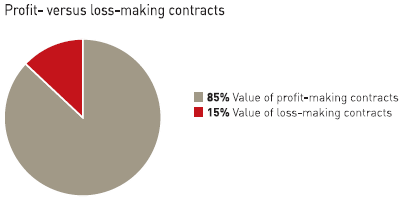
A key measure the group monitors on its Construction contracts is the contract profit/loss-maker ratio. It is a ratio of loss-making versus profit-making active contracts with a profit or loss greater than R100 000 for the year. Having achieved progressive improvements in performance over the last few years, the group’s loss-maker ratio for the year under review was affected by the costs incurred in the rectification of one pipeline contract in Jordan in the Middle East. Corrective action was successful. As outlined on page 52 this ratio was independently assured by PricewaterhouseCoopers Inc.
Looking forward
Key focus areas for F2012 Desired results Implement risk tolerance levels for the group based on the
board’s risk appetite and the group’s risk-bearing capacity.Key risk indicators and dashboards to monitor actual risks against tolerance levels set by the board Risk management and internal audit integration.Further integrate audit findings within the risk management process Ethics risk management.Report on ethics in line with the social and ethics requirements as per the new Companies Act. Continue to drive zero tolerance to a lack of ethical behaviour Risk management processes for non-construction business units.Contract risk lifecycles in place for non-construction business units Enhanced commercial and legal acumen and risk mitigation to ensure effective risk management around engineer, procure and construct (EPC) and design-build contracting models. A suite of risk assessment and contracting standards through which the group will be able to operate within acceptable risks and rewards -
Environment
The group further refined its environmental risk identification and assessment programmes. Actual and potential risks were and continue to be assessed and managed. Legal compliance also continued to be a focus area. The group’s internal environmental committee has been actively pursuing specific opportunities to reduce the group’s direct carbon footprint.
Delivery
Find below how we delivered on our objectives outlined in our F2010 integrated report.
Key focus areasDesired resultsStatusContinue to focus on certification. Ensure that all business units achieve ISO 14001:2004 certification in F2011. 77% of business units are certified. Implement a reduction in diesel project. Around 3% reduction in diesel consumption,
as this is the largest overall carbon footprint
contributor in the group.A voluntary research project was conducted with a fuel enhancer on certain of Group Five’s equipment and fleet. An average fuel consumption improvement of 4% was seen in initial testing. The product is set to be rolled out in the group in the new year following approval by exco. Apply for carbon credit certification. Develop and implement carbon emission
reduction targets.Individual projects that may qualify for carbon credits have been investigated. This includes a project for a fuel switch from coal to biomass in the Everite boilers with an eligibility study finalised.
We are currently reviewing the availability of adequate biomass. The switch can only be made once this has been confirmed.
Actively pursue opportunities in the renewable energy sector in southern Africa. Register Clean Development Mechanisms (CDM) projects in South Africa, which will
result in carbon credits.Projects are still in the development phase, but all Clean Development Mechanisms (CDM) requirements are in place. Manage regulatory risks and opportunities that include potential carbon taxes on diesel and electricity in certain regions where we operate. Detailed plans to minimise the risk to
Group Five.The group constantly improves its systems to measure its carbon footprint. This enables us to identify which areas will be taxable if the tax is implemented. In the meantime, a number of initiatives are being driven to further reduce the carbon footprint. Manage the impact of a potential fossil fuel tax of R100 per tonne CO2 by the end of calendar 2012 in South Africa.Effective mitigation through including costs of carbon tax into our pricing models once the tax becomes effective. In the meantime, implementing projects to reduce the group’s carbon footprint. A voluntary research project was conducted with a fuel enhancer on certain of Group Five’s equipment and fleet. An average fuel consumption improvement of 4% was seen in initial testing. The product is set to be rolled out in the group in the new year following approval by exco.  Key focus areasDesired resultsStatus
Continue improvement through:
– Full compliance to environmental legislation and other applicable requirements – Ensuring approval for environmental management plans and reports which are still pending for the group’s mining - focused operations – Ensuring that performance assessments and audits for mining operations are completed every two years and that specific risks inherent in the mining industry are addressed No fines or prosecutions and adhering to required legislation. No fines or prosecutions received. Some corrective action is taking place in Construction Materials. Record of decisions for construction contracts. Action plans developed and in place for all contracts.
Regular inspections and audits.
Prevent non-compliance notices.
Action plans, inspections and audits in place. No non-compliance notices received. Manage environmental non-conformances.Effective mitigation through including costs of carbon tax into our pricing models once the tax becomes effective. In the meantime, implementing projects to reduce the group’s carbon footprint. Corrective and preventive action reports in place and no fines or prosecutions during the year. Looking forward
Key focus areas for F2012 Desired results Control and management of radioactive devices used for density and moisture assessment.Ongoing environmental legal compliance at all construction sites as well as fixed operations.
Full control and management of radioactive nuclear gauges used for density and moisture assessment to ensure compliance with radiation legislation All actual and potential risks identified, investigated and managed Register Clean Development Mechanisms (CDM) projects qualifying for carbon credits.Reduce the group’s carbon footprint Ensure continued adherence to all legislation to prevent fines and prosecutions.No fines or prosecutions Progress on developing renewable energy projects.Registration of Clean Development Mechanisms (CDM) projects in South Africa, which will result in carbon credits. This in turn has a financial gain for the group Finalise group-wide implementation of the fuel enhancer.Realisation of at least 3% saving in group-wide diesel consumption -
Quality (business management system)
The key focus continued to be the progression from ISO 9001:2000 to ISO 9001:2008 across the group. All business units, outside of Construction Materials where significant restructuring took place, were certified.
Delivery
Find below how we delivered on our objectives outlined in our F2010 integrated report.
Key focus areas Desired results Status Fast-track internal audit programme. ISO 9001:2008 certification in all business units. All business units with the exception of the Construction Materials cluster are ISO 9001:2008 certified. Complete the integration of our SHEQ management system with quality. Proactive addressing of non-conformances to our quality standards. Enhanced management ability to consistently deliver at pre-determined standards and improved understanding of the specific factors which inhibit consistent delivery.
An integrated SHEQ management system was implemented. An incident management system was updated in line with each business unit’s requirements and was tested and implemented throughout Group Five.
Implementation of a new SHEQ structure which will drive one system, managed per cluster.Full implementation during F2011. Cluster heads were appointed and are driving the integrated system within each cluster. Looking forward
Key focus areas for F2012 Desired results Implement standard audits towards integrated management systems.Conduct standard internal audits in each certified business unit not yet audited Roll out a new SHEQ incident management system across all business units.System implemented, with training on the use of the system to take place in F2012 Analysis of the results of management standards across the group and identification of areas for improvement.Continuous improvement -
Commercial
The commercial function faced challenging conditions this year in maintaining alignment and consistency in the negotiation of the group’s preferred commercial terms when concluding contracts under tougher market conditions.
This was addressed through working closely with the group’s finance department to ensure that, where concessions to group policy were made, these were executed only with senior approval and only where risks could be mitigated. The group remained committed to adhering to its stated policy of cash and margin preservation.
Delivery
Find below how we delivered on our objectives outlined in our F2010 integrated report.
Key focus areas Desired results Status Increased focus on both basic and specialist commercial training. Continued improvement around commercial decision making. Basic training well established, with two courses presented during the year. Specialised training finalised for a number of different contracts. Alignment of best practice commercial terms to the group’s standard agreements. Ensure best practice on the group’s internal systems. Critical policies and procedures were established. Continuous development takes place on supplementary processes. Measurement, during contract execution, of adherence to risk processes and decisions made at contract inception. This process is currently monitored manually. Going forward, this will be automated.Contract execution in line with commercial terms and conditions, as approved at initial risk review meetings. Automated tracking of necessary changes in commercial decisions during negotiation phase and following contract approval dates. Outcome of initial risk review meetings now tracked and recorded electronically. Audits to be carried out to ensure final contracts are signed and executed in line with approved conditions at initial review stage. 
Looking forward
Key focus areas for F2012 Desired results Improve sub-contractor management by ensuring main contract risk transfer and evaluation of sub-contractor risk capacity.Ensure alignment of preferred forms of sub-contractor agreements for the key conditions of contracts Continued alignment of best practice commercial terms to the group’s standard agreements.Augment best practice available on the group’s internal systems with identified priorities, such as sub-contractors Measurement during contract execution of adherence to risk processes and decisions made at contract inception.Conduct audit of signed contracts to ensure compliance with outcomes of risk process -
Legal and regulatory compliance
The legal and regulatory compliance function continued to focus on creating awareness of all relevant statutes and legal developments to ensure continued regulatory compliance. During the year, there were a number of key new legislative changes, including the new Companies Act and the new Consumer Protection Act.
Delivery
Find below how we delivered on our objectives outlined in our F2010 integrated report.
Key focus areas Desired results Status Legal Spearheading the drawing up of formal group engineer, procure and construct (EPC) contract parameters for consideration and approval by the board. This will enable the board to formally determine the group’s risk appetite and risk tolerance in respect of EPC contracts, having given due consideration to the group’s risk-bearing capacity. The group delivered EPC parameters which were included in a modified contract lifecycle. This caters for the complexities of EPC contracting and was implemented by the risk team in Engineering and Construction. In addition, in support of the group’s strategic objective to participate in more contracts on an EPC basis, the legal department, in conjunction with the Group Five Academy, rolled out a number of seminars raising awareness of the increased risks associated with EPC contracts.
Regulatory compliance An anti-corruption drive to support the group’s over-border activities in Africa. Identify and raise awareness of the corruption risks facing the group. Develop comprehensive policies and procedures to manage corruption risk.
Awareness seminars were held during the year to ensure employees are informed of legislation surrounding matters of corruption both locally and abroad. The new Companies Act requires the establishment of a social and ethics committee. One of the key functions of this committee is to monitor the company’s efforts towards the reduction of corruption. Refer to page 117.
Focus on proactive involvement with both government and non-governmental anti-corruption agencies, both locally and over-border. To proactively contribute towards the eradication of corruption in the countries in which the group operates. The Organisation for Economic Cooperation and Development (OECD) included recommendations made by Group Five in their Phase 2 report which was released in July 2010. In the year under review, the group legal and compliance director represented the group on the task team which was established by the Engineering and Construction Risk Institute (ECRI) charged with preparing a best practice note on corporate corruption.
A focus over the next three years will be the installation of compliance logging and monitoring software (Exclaim) and the training of employees to utilise the software. The board receives quarterly compliance reports. These are currently compiled manually. The group’s new compliance software will enable the creation of online management dashboards and reports, as well as providing employees with online access to relevant statutes to drive compliance throughout the group. The implementation of the compliance software was achieved in the areas of HR, safety and health and environment in all business units other than Construction Materials due its intensive restructuring. Close out non-compliances with King III.The group is striving to achieve compliance with King III. Numerous non-compliances with King III which were previously identified were closed out during the year. For a table assessing the group’s compliance to King III requirements, refer to page 119.
Looking forward
Key focus areas for F2012 Desired results Legal Conduct awareness forums.Further improve of group-wide awareness of key legal, commercial, compliance and risk issues Regulatory complianceRoll out the compliance software system.Effective compliance management across all compliance sectors Assess the group’s compliance to the new Consumer Protection Act.Full compliance Assess the group’s compliance to the new Companies Act.Full compliance Continue closing out gaps in compliance to King III.Full compliance 
-
Company secretarial
A review from the company secretary is contained on page 115. Below we provide our delivery against objectives outlined in our F2010 integrated report.
Introduction
The recent changes in the legislative, regulatory and best practice standards of the corporate governance environment in South Africa have necessitated diligent consideration and review of governance policies and procedures by companies
Delivery
Find below how we delivered on our objectives outlined in our F2010 integrated report.
Key focus areas Desired results Status Companies Act No 71 of 2008, including a review of the terms of reference of the board committees to ensure full compliance with the Act. To gain full compliance with the new applicable requirements of the Act when it is enacted. To date, the board has approved an amended board charter and the terms of reference for its various board committees which are in compliance with the new Companies Act and King III. The board has committed to annually review these policy documents. Evaluation of the board, its committees and individual directors. An annual evaluation of the effectiveness of the board, committees of the board and the individual contribution of directors. The board conducted an independent external evaluation. Various initiatives have since been initiated to address the issues raised from this evaluation. The most material issue was broadening the board’s skills with the appointment of two additional non-executive directors. Board succession planning. Formalise and agree a succession plan for each member of the board. Although the board has determined its core skills requirements, this process must still be defined and implemented. Review of governance policies, procedures and relevant codes.Gain/maintain alignment with the requirements of King III, JSE Listings Requirements and the new Companies Act. The board has considered and approved various board policies, including an independent director questionnaire and professional advice policy. Group policies and procedures are continuously evaluated to gain alignment with leading governance practices. Looking forward
Our key corporate governance focus areas for F2012 are outlined in the review from the company secretary on page 118.