 |
|
||||||||


|
|
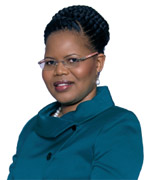
In a year of mixed fortunes, I am pleased to report that the Group Five management team has remained focused on the task at hand in a consistent manner despite the complex environment.
The macro-economic environment and strategyThe European sovereign debt crisis continued to define global economic conditions during the year under review. Short term solutions have periodically been put forward to address symptomatic ills in the Eurozone, but the long term, systemic changes necessary to lift Europe from its sustained recession have not yet emerged. While there have been flashes of positivity, it is unlikely that global markets will finally shrug off the impact of the 2008/2009 downturn until Europe fully and finally addresses its structural challenges.
With no clear end in sight to the stagnation impacting the global economy, trading conditions in South Africa mirrored those in many other parts of the world. The private sector has been constrained by the impact of the macro-economic environment and the industry has become markedly reliant on state-owned expenditure, resulting in significantly increased competition levels on contracts. The simultaneous failure or postponement of major private public partnership (PPP) initiatives in South Africa has placed further pressure on the local construction and engineering sector specifically.
| The group is encouraged by the recent initiatives within government to better link the country’s economic and social development needs with the necessary supporting infrastructure investment. The role of the Presidential Infrastructure Coordinating Commission (PICC) will be crucial in this regard. The group is committed to contribute to and support this important body. |
With operational experience that extends to 25 countries, Group Five has taken important steps in ensuring that it is structured to navigate variable conditions and to take advantage of growth opportunities within the international market – particularly the African economy – as they arise.
Risk managementGroup Five’s risk management strategy is shaped by the markets’ challenging context. It has thus developed in two primary areas. Firstly, the group has continued to focus on its own strategic and operational transformation to cope with challenging market conditions over the long term. Secondly, the group has sought to continue strengthening its strategic approach to risk management and to respond to risk factors at an operational level by threading a risk management mind-set into all of its business processes.
The group’s culture of transparency and integrity underpins these efforts, particularly under adverse trading conditions when our stakeholders need to be assured of the group’s capacity to deal with adversity.
GovernanceGroup Five manages and reports on key issues such as finance and sustainability in an integrated business model, inclusive of an integrated approach to reporting. This approach reflects our ongoing commitment to adhering to the governance guidelines set out in the King Code of Governance (King III).
Last year’s integrated report featured important new disclosure measures, such as reports from the chairpersons of key board committees. The move towards clear, concise and integrated reporting continues this year with an integrated report that is structured to address the group’s material issues and feedback from stakeholders. The most notable improvement is a condensed format, supported by the use of electronic channels as a repository for a portion of the integrated report.
Transformation, skills development and socio-economic developmentGroup Five is transitioning into a multi-regional, multi-disciplinary group operating according to a singular company mind-set. A comprehensive internal change management programme, led by senior management, has played an important role in driving this transformation, as well as in embedding change readiness into the structure of the group as a whole. This has been a particularly important process given the relatively low change management and transformation score historically achieved in our employee surveys.
One of the major challenges during the year under review was continuing to strengthen the group’s skills base while managing a headcount reduction in key areas, necessitated by the depressed economic environment. Given the challenging market conditions and the uncertainty that arises from such conditions, it is pleasing to note that the group’s internal climate scores have generally held steady in the areas of performance and human capital management. One of the most significant ratings within these broad areas is that of communication, which has improved from 51% to 61% over a four-year period.
Group Five is rated as a level 2 broad-based black economic empowerment (BBBEE) contributor to the South African economy. Significant ongoing effort has been required to manage an increasingly rigorous auditing process around BBBEE status and certification. With the end goal of maintaining or even improving our overall BBBEE rating in mind, the group focused, in the year under review, on both improving the impact of its various transformation and skills development programmes, as well as its ability to measure and communicate the effectiveness of these programmes. As the content of this report clearly shows, we have made important strides in this regard.
 |
Refer to the online report at www.groupfive.co.za for more information on the Group Five employee survey. |
 Looking forward, Group Five
will continue to develop the
skills required for future
growth while focusing on retaining
existing capacity – which, in turn,
requires the achievement of a delicate
balance between investment in
required resources against desired
returns in fluid markets. Looking forward, Group Five
will continue to develop the
skills required for future
growth while focusing on retaining
existing capacity – which, in turn,
requires the achievement of a delicate
balance between investment in
required resources against desired
returns in fluid markets. |
Within this context, Group Five’s continued focus on operating seamlessly and according to a singular mind-set and culture across all areas of operation will be a decisive success factor.
Future growth opportunitiesThe International Monetary Fund (IMF) estimates that average growth on the African continent will be roughly 5.5% in the coming year. In addition, six of the ten fastest-growing economies in the world are currently estimated to be located on the African continent. In general, then, indicators appear to confirm South African Trade and Industry Minister Rob Davies’ June 2012 assertion that a group of roughly 20 emerging economies are becoming the main drivers of global economic growth and dynamism1.
There is an important corollary, however, to the widely accepted developing economy growth narrative, and it is provided by South Africa’s own public infrastructure story. In South Africa there has been a significant lag in government’s execution of crucial infrastructure projects which, when coupled with a depressed private sector and the postponement of key PPP initiatives, place projected economic growth rates under significant downward pressure. Simply put, forecasting growth becomes a complex exercise when major public projects are statistically likely to lag, at best, and at worst are likely to be delayed indefinitely. The ability of national governments to execute infrastructure development projects within original timeframes must therefore be factored into growth forecasts seeking to encapsulate the potential inherent in Africa’s generally positive development story.
Africa’s development trajectory has been largely more positive and the group’s focus on strategic diversification beyond South Africa has thus proved to be well suited to the current economic climate.
Group Five possesses considerable strategic and operational experience across the continent as a whole. This experience puts it in a strong position to diversify from areas where growth is constrained and to mitigate against the risks of doing business on the continent. The strength of the group’s risk management focus will be central to its ability to maximise growth opportunities.
Group Five continues to monitor conditions carefully in the Middle East and North Africa, which experienced significant political upheaval over the year under review. The watchword continues to be prudence, and the scale of activity in this region has been limited to those areas of operation that clearly meet the group’s risk management approach, whilst dealing with pre-global financial crisis legacies.
Central and Eastern Europe remain negatively impacted by the economic slowdown and the socio-political confusion that currently dominates the broader European economy. Group Five operates in Eastern Europe through its Intertoll brand, which has long term operating contracts in place, which to some extent mitigate short term volatility.
| “While clear growth opportunities continue to present themselves, Group Five will seek over the coming year to continue to achieve the diversified scale necessary to take advantage of mainly South African and African growth opportunities.” |
Appreciation
I take this opportunity to thank the members of the Group Five board most sincerely for their ongoing input and insight. A special appreciation to one of our longest-standing members, Baroness Lynda Chalker, who will be retiring from the board at the next AGM after 12 years of excellent service to Group Five. She has been an extremely valuable member of the board over the years and we will miss her insight.
Appreciation must also go to the group’s executive management, which has shown strong leadership and strategic ability over the period under review. Special thanks, then, to Mike Upton and his team for the resilience they have shown in a difficult year and for their shared vision for the future. In addition, on behalf of Group Five I express our gratitude to our suppliers, clients and business partners.
The employees of Group Five as a whole also deserve considered appreciation. It is only through your efforts that the group has been able to navigate a challenging economic environment. I look forward to working with you next year.
Philisiwe Buthelezi
Chairperson
3 August 2012
| Back to Group Five | © Copyright by Group Five. All rights reserved. | Back to top ^ |